 Skip to content

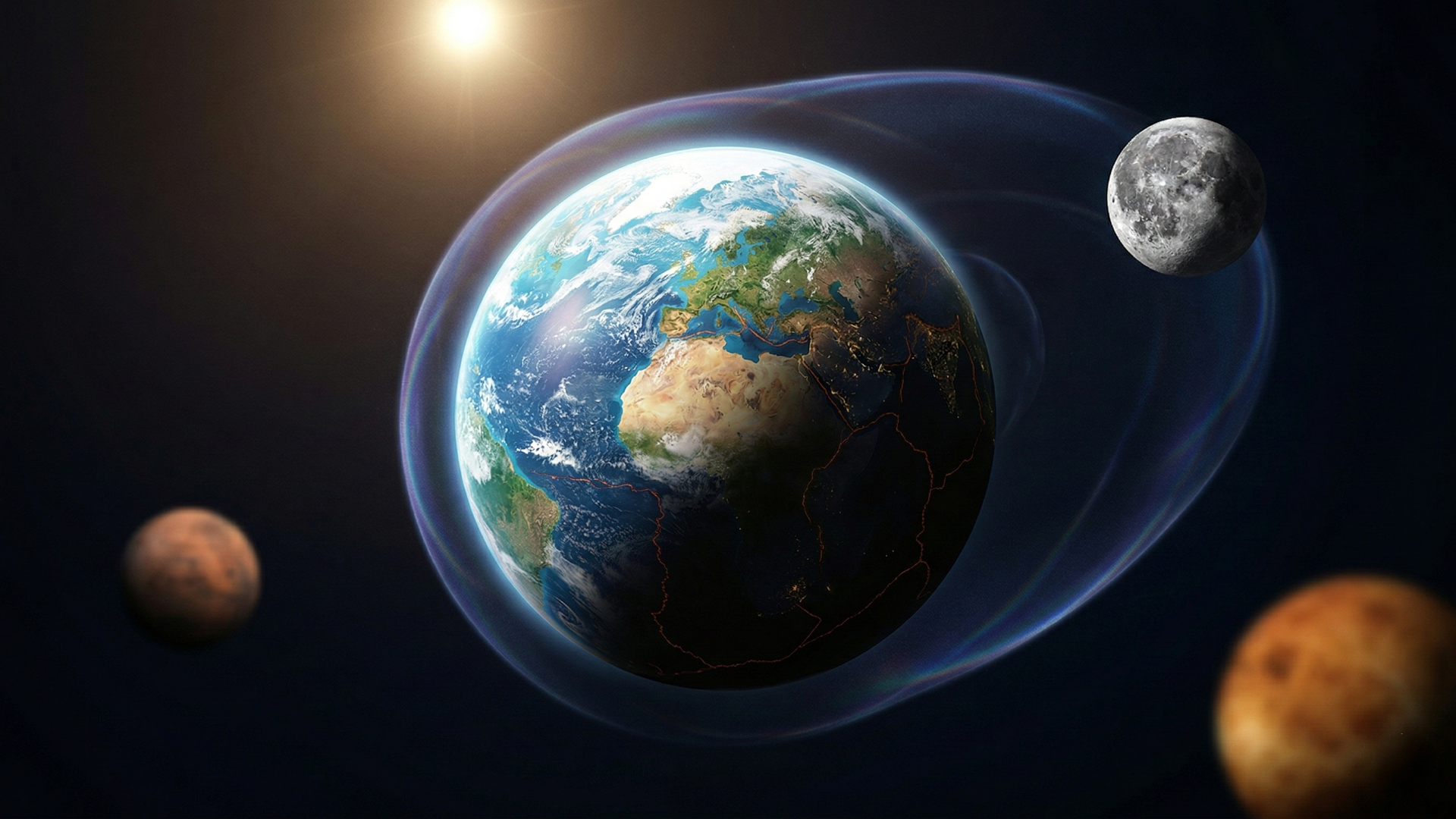
At first glance, the universe is a hostile, cold, and unforgiving place. Yet here we are. Today, we’re going to unravel, with geophysical and astrophysical data, why Earth is perfect for life. We’ll understand why our home is suspiciously exceptional, and why the search for habitable exoplanets remains science’s greatest challenge.
Table of Contents
ToggleBottom Line Up Front: The Earth's characteristics that allow life
Para que un planeta albergue vida compleja, debe superar una serie de brutales filtros cósmicos. La Tierra es el ejemplo perfecto porque combina:
La estrella adecuada: una enana amarilla de tipo G estable que no presenta llamaradas letales como las enanas rojas.
La zona habitable: una órbita a 149,6 millones de kilómetros que permite la existencia de agua líquida.
Un doble escudo: la magnetosfera terrestre y la gravedad de Júpiter, que desvían la radiación solar y los asteroides mortales.
El termostato geológico: El ciclo del carbono y los silicatos, impulsado por la tectónica de placas, que regula el CO₂ a lo largo de milenios.
Estabilidad axial: Una Luna inusualmente grande que estabiliza nuestra inclinación de 23,5°, evitando cambios climáticos caóticos.
El universo tiene unos 13.800 millones de años y está habitado por billones de galaxias. Sin embargo, la Tierra es una sinfonía de factores que rozan lo milagroso. Analicemos la anatomía de este milagro cósmico. Comencemos con el principio geográfico: la zona habitable.
We Orbit the Right Kind of Star
The first great filter isn’t our planet—it’s our neighborhood. We orbit a G-type main-sequence star (a yellow dwarf). This is one of the key reasons why Earth is habitable.
Most stars in the universe are red dwarfs (M-dwarfs). They’re volatile. They bombard their planets with X-ray flares that sterilize any chance of life. Our Sun is stable. It gives us consistent energy without frying us.
Why is Earth the only planet with life in our solar system? Part of the answer is that we have the right star, and our neighbors don’t. Venus is too close. Mars is too far. We’re in the sweet spot.
Jupiter Acts as Our Cosmic Bodyguard
We also have a cosmic bodyguard: Jupiter. Its gravitational mass acts as a vacuum cleaner, attracting or deflecting asteroids and comets that would otherwise cause mass extinctions.
Without Jupiter, Earth would be hit far more frequently. Studies estimate that without a gas giant in the outer system, the frequency of extinction-level impacts would increase by a factor of 1,000. The unique features of Earth include this outer-system guardian.
The Goldilocks Zone and the Water Anomaly
We orbit in the circumstellar habitable zone—the Goldilocks Zone—where temperatures allow liquid water. A deviation of just 5% would turn Earth into Venus (a toxic 460°C hellscape) or Mars (a frozen desert). Five percent. That’s the difference between an empire and a wasteland.
This precise positioning is one of the fundamental characteristics of Earth that support life.
And Earth’s water is an astrophysical anomaly. It expands when freezing, preventing oceans from solidifying from the bottom up. If it behaved like almost every other liquid, ice would sink, and our oceans would be solid blocks. Instead, ice floats, insulating the liquid below. This single property allowed life to survive ice ages.
Water also has a high specific heat, stabilizing global climate. And it’s the universal solvent that allowed the first chemical reactions for life. This is a major part of why Earth is perfect for life and other planets aren’t.
The Magnetic Shield That Protects Us
Three thousand kilometers beneath your feet, a core of molten iron spins at 5,200°C. This dynamo generates Earth’s magnetosphere—a magnetic field that acts like an umbrella of charged particles the size of Jupiter, deflecting solar wind that would otherwise strip our atmosphere.
Mars lost its umbrella. That’s why it’s a desert. Without a magnetic field, solar wind scrapes away atmosphere molecule by molecule. Mars once had oceans. Now it has rust.
Let’s compare what makes Earth suitable for life versus our neighbors:
| Planet | Main Atmosphere | Magnetic Field | Avg. Temperature | Capacity for Life |
|---|---|---|---|---|
| Venus | CO₂ (Toxic) | Almost none | +464°C | Runaway greenhouse |
| Earth | Nitrogen/Oxygen | Strong (Active) | +15°C | Thriving Biosphere |
| Mars | CO₂ (Thin) | Dead | -65°C | Atmosphere stripped |
Mars is a planetary graveyard. It lost its dynamo, then its atmosphere, then its oceans. The reasons why Earth is habitable require that active magnetic shield.
The Moon: Our Unsung Hero
Earth suffered a cataclysm 4.5 billion years ago: the impact of the protoplanet Theia. From that debris, the Moon was born. Its gravity acts as a counterweight, keeping our axis tilted at 23.5°.
Without it, the Milankovitch cycles (orbital variations) would be chaotic, causing erratic ice ages. Mars, with its tiny moons, wobbles up to 60° over millions of years. That kind of instability makes complex life impossible.
Our Moon is unusually large—a quarter of Earth’s diameter. For context, imagine a basketball with a softball orbiting it at the right distance to keep it from tipping over. That’s what we have. This stability is one of the overlooked characteristics of Earth that support life.
Plate Tectonics: The Planet’s Thermostat
Add plate tectonics. Through the carbon-silicate cycle, the planet subducts carbon into the mantle and releases it through volcanoes. This acts as a million-year thermostat.
When CO₂ levels rise, weathering increases, pulling carbon out of the atmosphere. When levels drop, volcanoes replenish it. This feedback loop has kept Earth’s temperature in the liquid-water range for billions of years. Venus has no plate tectonics. Its CO₂ is trapped, creating a runaway greenhouse. This long-term regulation is one of the most critical reasons why Earth is habitable.
The Rare Earth Hypothesis: Putting a Number on the Miracle
Astrophysicist Martin Rees speaks of “Just Six Numbers.” If fundamental constants (gravity, the mass of an electron, the strong nuclear force) varied by 0.0000001%, carbon wouldn’t exist. Stars wouldn’t form. The universe would be empty.
Research by Vazza and Feletti (2020) even suggests a staggering similarity between the cosmic web and the human brain’s neuronal network—hinting at an underlying structural law we don’t yet understand.
The Rare Earth Hypothesis (Ward & Brownlee) puts a number on this rebellion: the probability of a rocky planet in a habitable zone also having a strong magnetic field, a large stabilizing moon, and active plate tectonics is less than 1 in 10,000.
That’s not a miracle. That’s a statistical outlier. And you’re living on it.
The Fermi Paradox: Where Is Everyone?
If conditions are possible, where is everyone? The Fermi Paradox asks why, in a universe of billions of years and trillions of stars, we see no evidence of other civilizations.
As of March 2026, the James Webb Space Telescope has found no clear biosignatures in candidates like TRAPPIST-1e. No atmospheric oxygen. No methane combinations that suggest life. The silence is deafening.
The Great Filter hypothesis suggests that at some point—maybe the jump from single-celled to complex life, maybe the development of technology—most civilizations fail. We may have already passed it. Or it may lie ahead.
This makes understanding why Earth is perfect for life not just an academic exercise. It’s a survival imperative.
Frequently asked questions about why Earth is perfect for life
What are the main reasons why Earth is habitable?
The right star, the Goldilocks zone, a protective magnetic field, Jupiter as a shield, a large stabilizing moon, and active plate tectonics.
Why is Earth the only planet with life in our solar system?
Venus lost its water to a runaway greenhouse effect. Mars lost its magnetic field and atmosphere. Only Earth maintained the perfect balance.
What would happen if Earth had no magnetic field?
Solar wind would strip the atmosphere and evaporate the oceans within a few million years, leaving Earth arid and sterile like Mars.
What is the probability of finding another Earth?
While billions of exoplanets exist, the probability of finding one with our exact combination of factors is less than 1 in 10,000, according to the Rare Earth Hypothesis.
What is the Anthropic Principle?
The idea that the universe has the properties we observe because if it were different, we wouldn’t be here to observe it. It’s not explanation—it’s recognition.
What does this miracle mean to you?
You are the result of 4.5 billion years of consecutive victories against cosmic entropy. Every one of your ancestors, from the very first cell, survived long enough to reproduce. That chain was never broken: not by asteroids, not by ice ages, not by volcanic winters.
From where I write this, on the Caribbean coast, watching the sunrise over the Sierra Nevada, I remember that this light traveled eight minutes through the void to reach my skin. It only made it here because the orbit didn’t change, because Jupiter kept the asteroids away, because the core kept spinning. That’s not magic. That’s physics. And it’s fragile.
Climate change is our own self-imposed filter: a direct threat to the carbon cycle that took eons to adjust. Understanding why Earth is perfect for life and that we inhabit the most exceptional oasis in the universe should be our primary driver of action, not panic.
The Earth is suspiciously perfect. It’s up to us to keep it that way.
If you understand that reality is not a coincidence and you seek to decipher the operating systems that govern the world, from astrophysics to human behavior, you may be ready for the next step..
OTROS TEMAS
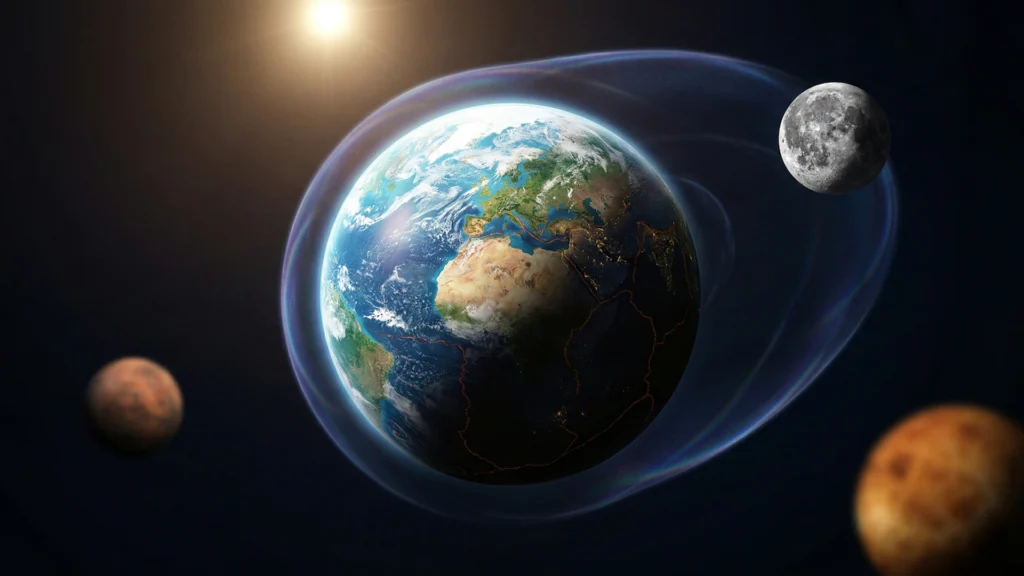
¿Why Is Earth Perfect For Life?: The Cosmic Miracle.
Imagine this scenario: you're floating in the infinite vacuum of space, looking down at a tiny blue dot. That dot isn't just any planet. It's a cosmic gear so precisely calibrated in its physical characteristics that it defies all the probabilities proposed by modern astrobiology.
Mathematical coincidence? Design? Or the inevitable emergence of immutable physical laws dictating the origin of life?

la ilusión del “segundo cerebro”: por qué acumular información no es desarrollar sabiduría.
la diferencia fundamental entre la información (la acumulación pasiva de datos, el vicio del “segundo cerebro”) y el…

Discernimiento: ¿Cómo Tomar Decisiones con Criterio & Claridad?
"I. The art of discernment"
¿Why Is Earth Perfect For Life?: The Cosmic Mirale
¿Why Is Earth Perfect For Life?: The Cosmic Mirale
¿Why Is Earth Perfect For Life?: The Cosmic Mirale
¿Why Is Earth Perfect For Life?: The Cosmic Mirale
¿Why Is Earth Perfect For Life?: The Cosmic Mirale
¿Why Is Earth Perfect For Life?: The Cosmic Mirale
¿Why Is Earth Perfect For Life?: The Cosmic Mirale
¿Why Is Earth Perfect For Life?: The Cosmic Mirale
¿Why Is Earth Perfect For Life?: The Cosmic Mirale
¿Why Is Earth Perfect For Life?: The Cosmic Mirale
¿Why Is Earth Perfect For Life?: The Cosmic Mirale
¿Why Is Earth Perfect For Life?: The Cosmic Mirale
¿Why Is Earth Perfect For Life?: The Cosmic Mirale
¿Why Is Earth Perfect For Life?: The Cosmic Mirale
¿Why Is Earth Perfect For Life?: The Cosmic Mirale
¿Why Is Earth Perfect For Life?: The Cosmic Mirale
¿Why Is Earth Perfect For Life?: The Cosmic Mirale
¿Why Is Earth Perfect For Life?: The Cosmic Mirale
¿Why Is Earth Perfect For Life?: The Cosmic Mirale
¿Why Is Earth Perfect For Life?: The Cosmic Mirale
¿Why Is Earth Perfect For Life?: The Cosmic Mirale
¿Why Is Earth Perfect For Life?: The Cosmic Mirale
¿Why Is Earth Perfect For Life?: The Cosmic Mirale
La anomalía hídrica y la zona habitable

Let’s compare why Earth succeeded where our neighbors failed:
| Planet | Main Atmosphere | Magnetic Field | Avg. Temperature | Capacity for Life |
| Venus | CO2 (Toxic) | Almost none | +464°C | Runaway greenhouse effect |
| Earth | Nitrogen / Oxygen | Strong (Active) | +15°C | Thriving Biosphere |
| Mars | CO2 (Very thin) | Dead | -65°C | Atmosphere stripped by sun |
Mars is a planetary graveyard because it lost its internal dynamo; without a shield, the sun evaporated its oceans.
Orbitamos en la zona habitable circunestelar (la zona de Ricitos de Oro), donde la temperatura no nos abrasa (como a Venus) ni nos congela (como a Marte). Una desviación de tan solo un 5 % en nuestra órbita alteraría drásticamente los océanos.
Y el agua de la Tierra es una anomalía astrofísica: se expande al congelarse (impidiendo que los océanos se congelen desde abajo), tiene un alto calor específico que estabiliza el clima y es el disolvente universal que permitió las primeras reacciones químicas para el origen de la vida.
La estrella correcta y el escudo de Júpiter
El primer gran filtro no es nuestro planeta, sino nuestro entorno. Orbitamos una estrella de secuencia principal de tipo G (una enana amarilla). Esto es crucial porque las estrellas más comunes del universo, las enanas rojas (enanas M), son inestables y bombardean sus planetas con llamaradas de rayos X que esterilizan cualquier intento de vida.
Además, tenemos un guardaespaldas cósmico: Júpiter . Su colosal masa gravitacional actúa como una aspiradora en el sistema solar, atrayendo o desviando asteroides y cometas que de otro modo impactarían la Tierra, provocando extinciones masivas incesantes.
La dinamo interna y la magnetosfera
A unos 3.000 kilómetros bajo nuestros pies, un núcleo de hierro fundido gira a 5.200 °C. Esta dinamo genera la magnetosfera terrestre , un campo magnético que desvía el viento estelar y la radiación cósmica.
Illustrative images.


The Silver Anchor and the Carbon-Silicate Thermostat
Earth suffered a cataclysm 4.5 billion years ago: the impact of the protoplanet Theia. From that debris, the Moon was born. Its gravity acts as an anchor, keeping the Earth’s axis tilted at 23.5°. Without it, the Milankovitch Cycles (the Earth’s orbital variations) would be chaotic, causing erratic ice ages incompatible with evolution.
Add to this plate tectonics. Through the Carbon-Silicate Cycle, the planet subducts carbon into the mantle and releases it through volcanoes, acting as a million-year thermostat that prevents us from becoming a snowball or a fireball.

La Danza Geológica y la Hipótesis Gaia
Aquí entra la ciencia dura que solemos ignorar al mirar el cielo. La tectónica de placas no es solo la responsable de los terremotos; es el sistema de reciclaje vital del planeta.
Las placas tectónicas mueven continentes, subducen carbono al manto terrestre y lo liberan lentamente a través de los volcanes. Este ciclo a largo plazo actúa como un termostato global, manteniendo los niveles de CO2 en un equilibrio que evita que nos convirtamos en una bola de nieve perpetua o en un invernadero desbocado.
El científico James Lovelock llevó esto un paso más allá con la Hipótesis Gaia. Propuso que la Tierra no es una roca pasiva, sino un sistema autorregulado; casi un superorganismo. La vida no se limitó a adaptarse a la Tierra; la terraformó. Cuando las cianobacterias comenzaron a producir oxígeno hace 2.400 millones de años (el Gran Evento de Oxidación), crearon la atmósfera que respiramos hoy y la capa de ozono que nos protege de los rayos UV. Somos parte del engranaje.

imagenes ilustrativas.

The Drake Equation and the Silence of the Fermi Paradox
Astrophysicist Martin Rees speaks of «Just Six Numbers»: if the fundamental constants of physics varied by 0.0000001%, carbon would not exist. Research by Vazza and Feletti (2020) even suggests a staggering structural similarity between the cosmic web and the neuronal network of the human brain, hinting at an underlying structural law.
The Drake Equation attempted to estimate how many active civilizations exist in our galaxy, but the Rare Earth Hypothesis (Ward and Brownlee) suggests that while bacteria might be common, intelligent life is a statistical miracle.
If conditions are possible, where is everyone? As of March 2026, the James Webb Space Telescope (JWST) has found no clear biosignatures in candidates like TRAPPIST-1e. The silence of the Fermi Paradox remains absolute.
The Drake Equation and the Silence of the Fermi Paradox
Si ampliamos el foco de la Tierra al cosmos, el misterio se profundiza. El astrofísico Martin Rees lo definió en su concepto de «Just Six Numbers» (Solo Seis Números): si las constantes fundamentales del universo (como la gravedad o la masa del electrón) variaran un 0,0000001%, no existirían las estrellas, ni el carbono, ni nosotros.
Esto nos lleva a la Hipótesis de la Tierra Rara (Ward y Brownlee): la vida microbiana podría ser común en la galaxia, pero la vida compleja requiere una cadena de casualidades. La probabilidad de que un planeta rocoso en zona habitable tenga además campo magnético fuerte, luna grande estabilizadora y placas tectónicas activas se estima en menos de 1 entre 10.000 a 100.000 según modelos de Rare Earth (actualizados en los 2020s).
Esto plantea el Gran Filtro de la Paradoja de Fermi. Si las condiciones son posibles, ¿dónde están todos? A marzo de 2026, tras docenas de observaciones de candidatos como TRAPPIST-1e o K2-18b, Telescopio Espacial James Webb (JWST) aún no ha encontrado ninguna atmósfera similar a la nuestra con biofirmas claras. El silencio sigue siendo ensordecedor. Tal vez, el paso de vida simple a civilización tecnológica es el filtro que pocos superan. O tal vez, las civilizaciones tienden a autodestruirse.
Astrophysicist Martin Rees speaks of «Just Six Numbers»: if the fundamental constants of physics varied by 0.0000001%, carbon would not exist. Research by Vazza and Feletti (2020) even suggests a staggering structural similarity between the cosmic web and the neuronal network of the human brain, hinting at an underlying structural law.
The Drake Equation attempted to estimate how many active civilizations exist in our galaxy, but the Rare Earth Hypothesis (Ward and Brownlee) suggests that while bacteria might be common, intelligent life is a statistical miracle.
If conditions are possible, where is everyone? As of March 2026, the James Webb Space Telescope (JWST) has found no clear biosignatures in candidates like TRAPPIST-1e. The silence of the Fermi Paradox remains absolute.
Today, we’re going to unravel, with geophysical and astrophysical data, why Earth is perfect for life. We’ll understand why Earth is perfect for life by examining six critical factors, and why the search for habitable exoplanets remains science’s greatest challenge.
Today, we’re going to unravel, with geophysical and astrophysical data, why Earth is perfect for life. We’ll understand why Earth is perfect for life by examining six critical factors, and why the search for habitable exoplanets remains science’s greatest challenge.
ar biosignatures in candidates like TRAPPIST-1e. The silence of the Fermi Paradox remains absolute.
